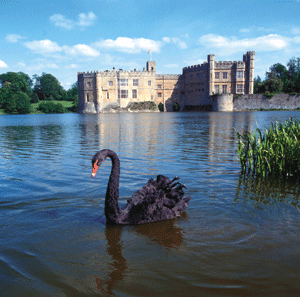
 Kea Chick on view at Leeds Castle Aviary
A Kea chick has emerged from his indoor nest box at Leeds Castle Aviary and can now be viewed in its enclosure. The chick hatched in February this year, the proud offspring of a rare Kea female, which arrived early in 2008 and was successfully pared with the aviary’s existing Kea male.
Keas are ground nesting mountain parrots from New Zealand and are infamous for being playful and mischievous. They are not commonly bred in Zoological collections and are classified as endangered in the wild.
Read more in the magazine…
Buy a copy now!
Visit the Leeds Castle website
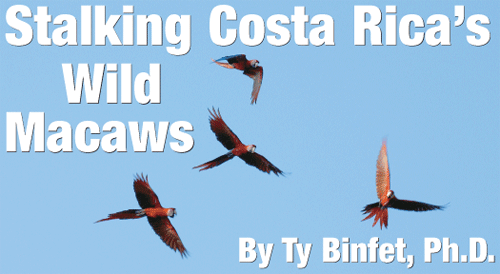
A recent trip to Costa Rica provided a rare encounter for this parrot enthusiast. We purposefully chose Jaco, which is mostly known as a surfer’s paradise on the Pacific coast, but for us the draw was mentioned in the margins of the guidebooks – local flocks of macaws.
Hoping to see the giant birds up close, we went to the nearby Carrera Bird Park, dutifully paid our guide fees, and trekked into the jungle. Despite having said that we were only interested in seeing macaws, it took a while for our guide to realize that we had little interest in any other local flora and fauna that she pointed out in the tropical forest.
Read more in the magazine…
Buy a copy now!
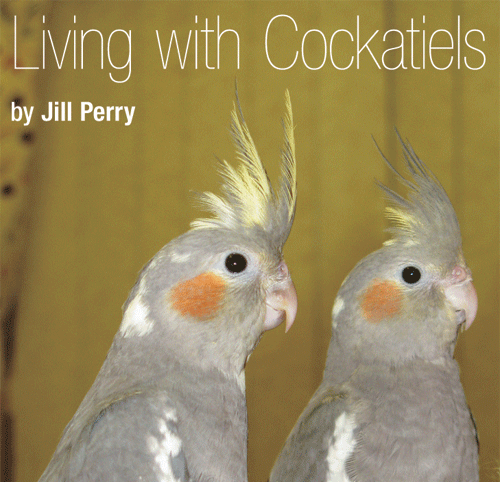
Muriel Barnes, and her husband Keith, from Norfolk, have been keen bird-keepers for over 25 years. They started out with cockatiels, and then as they became more experienced, branched out into breeding a large variety of conures and poicephalus parrots. But, cockatiels have always remained very special in their hearts, and to this day, they still delight in their mixed colony of tame birds. Here Muriel tells their story:
Nearly all of our cockatiels are rescue birds, some have been with us a very long time and all will see out their retirement in our aviaries. As cockatiels have arrived on our doorstep, those in pairs have been placed in our large colony flight, and solitary birds have been placed in a flight set aside solely for single birds.
Very often, but not always, it is the lone cockatiels that are at their lowest ebb when they reach us, but we give them all the opportunity to bond with a mate, of their own choosing. Our cockatiels are encouraged to pair up for their own happiness, rather than for the offspring they will produce, but are given the opportunity to breed each season, if they so wish.
Amazingly, some of our older cockatiels, of 18 and 19 years old, are still fertile and are still continuing to breed each year. We put this surprising phenomenon, down to the fact that our birds are not over-bred, they’re fit and healthy, and they are relaxed. Our cockatiels are never allowed to go more than two rounds, in any one season, and then they are rested until the following spring. They are also fed a top quality, mixed and nutritious diet.
Read more in the magazine…
Buy a copy now!
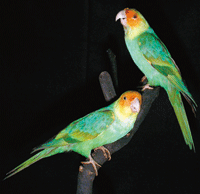 The Carolina parakeet
by Bob Alison
The Carolina Parakeet (Conuropsis carolinensis) vanished into oblivion almost a century ago. It was the only psittacid indigenous to the New World, north of Mexico, to have occurred in recent times. Its disappearance has been linked to largely avoidable events that have since taken place elsewhere, with comparatively devastating consequences with regard to some other parrots. Humankind should have learned an important lesson on parrot conservation as a result of the demise and extinction of the Carolina parakeet. Otherwise, its loss would be in vain.
All that remains to confirm that the Carolina parakeet existed at all are about 720 museum study skins, 16 skeletons, a few eggs, several anecdotal accounts and a couple of illustrations.
Read more in the magazine…
or here on Wikipedia
Buy a copy now!
Healing the Emotional Component of Stress Related Feather Destruction
PART ONE
Because this topic, ‘recovering from stress related feather destruction’, is so involved, it is divided into three areas of healing. In May we discussed the role that stress plays in relation to feather destruction and disease. Our June topic explored how to alter the diet so a bird could better cope with stress and have his healing process supported through nutrition.
This month we’ll explore a new way of understanding and healing traumatic emotional experiences a parrot has suffered. Next month we’ll look at the case study of a parrot and its caretaker that I’m currently working with. The information in this and next months column will shed light on the unique healing process I use to help a parrot transmute previously experienced emotional traumas. These three layers of healing - understanding and minimizing the effects of stress, improving the bird’s diet and healing past emotional trauma - all coalesce to provide a strong foundation for healing stress related feather destruction in a holistic manner.
Read more in the magazine…
Buy a copy now!
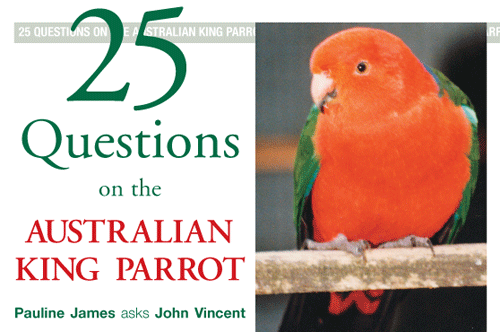
John Vincent, a dedicated and experienced parrot breeder, from Bedfordshire has been breeding Australian King Parrots for nearly 40 years, and tells me, “Compatibility is the key to success when breeding the King Parrot, and this doesn’t necessarily mean letting them choose their own partners. These birds have strong individual characters, and it is extremely important that their personalities be taken into consideration, before allowing two individuals to pair-off.”
John strongly recommends that anyone starting out with this species, acquire at least four to six individuals to begin with, even if it means joining forces with another breeder, and put them into a large flight altogether to be assessed. He explains, “Even if a pair, begin to pair-off naturally, it is still absolutely essential to ensure that a dominant bird is choosing a docile partner, or the partnership will be doomed. Two aggressive Kings’ paired together can do each other much harm, and two docile parrots will do absolutely nothing!”
Read more in the magazine…
Buy a copy now!